
Life Is Waiting For Your Answer


I almost didn't download the audiobook.
Three and a half hours to Toronto, a window seat, and nothing planned except Niagara Falls waiting on the other side.
I pressed play somewhere over the clouds and didn't take my headphones off until we landed.
Viktor Frankl spent three years in Auschwitz.
He arrived with nothing left of the life he had built — his work, his family, the manuscript he had spent years writing. The guards took everything, including his name. He became a number.
And inside all of that, he did something I wasn't expecting.
He thought about his wife.
Not in the way we usually think about someone we miss. He talked to her. He felt her there. So present that for moments, the camp became the thing that seemed unreal.
He wrote that it was in those moments he understood something about love he had never understood before — that it doesn't need the other person to be in the room. That it lives in you, and it can carry you when nothing else can.
I took my headphones off.
Looked out the window.
And recognized exactly what he was describing.
I just hadn't been doing it with a person.
I talk to God the way Frankl talked to his wife.
In the middle of ordinary things. Before a procedure. On a flight. In the car before the day begins.
It's a relationship I've never been able to explain properly. The words I know don't reach it. It isn't friendship, not the way I know friendship. It isn't the love I have for my daughter Marcela, which is something that rearranges everything, every single day, in ways I still don't have words for. And it isn't the love I have for my husband — a love that has grown deeper with every year, the kind that builds slowly and keeps surprising you, the kind you don't fully understand until you're inside it.
This is something underneath all of those.
The thing that was there before any of them. The one that circumstances can't reach.
Listening to Frankl at 30,000 feet, I finally understood why that relationship has always felt different from everything else in my life.
It's the only love that doesn't need anything from the outside to remain whole.
I've spent years watching women carry things nobody around them could see.
Some of them walk into my clinic with stories that would break most people — and they still have something behind their eyes that hasn't gone out.
Others come in and everything looks fine. Successful, organized, loved. And they're exhausted in a way that has nothing to do with sleep.
For a long time I couldn't explain what made the difference.
Then I started paying attention to something specific.
The women who keep moving — not perfectly, not without pain, but moving — almost always have something that holds them from the inside. Something that doesn't depend on circumstances to remain true.
The others are waiting.
Waiting for the right moment. Waiting to feel ready. Waiting for something outside them to shift first before they allow themselves to begin.
And waiting, I've learned, is one of the most convincing things a person can do to herself. It feels like patience. It feels like wisdom. It feels like she's just being careful.
But waiting is also how years disappear.
I think about a woman I worked with not long ago.
She was in her mid-thirties when she decided to stop waiting.
She had spent years putting herself last — her health, her choices, her own reflection in the mirror. Just the slow accumulation of days where she came second, then third, then stopped counting at all.
Until one day she looked at where that road was going and decided she didn't want to arrive there.
So she started answering.
Not with a plan. With one decision. Then another. Then another after that.
She told me the first turning point wasn't the weight she lost or the surgeries she eventually chose. It was cutting sugar. One thing, decided on a Tuesday, that changed how she saw herself by Friday.
"I didn't wait until I felt ready," she told me. "I just stopped waiting."
By the time she came to see me, she had rebuilt her health, her body, and something harder to name — her relationship with her own reflection.
The work we did together was the last layer — scar color equalization, restoring what the journey had marked on her skin.
And she wasn't ashamed of those marks. She just didn't see why she should give anyone else a reason to define her story.
That, too, is an answer.
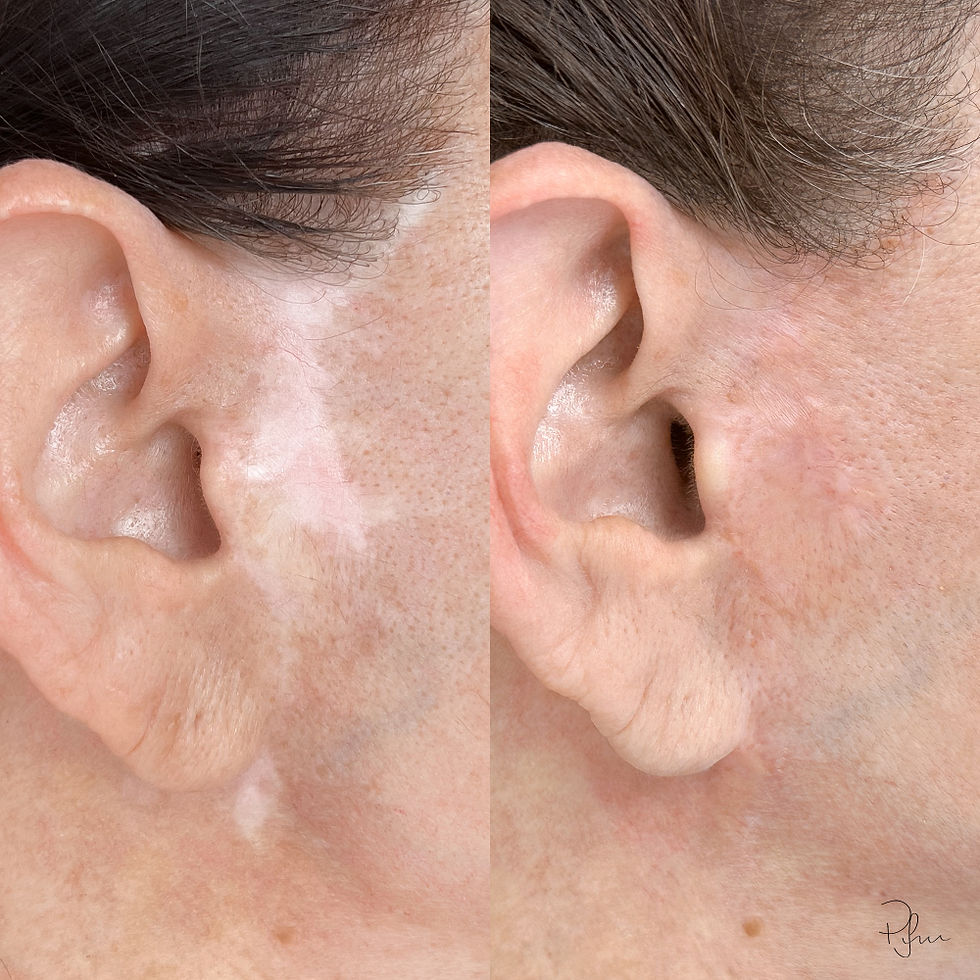
Frankl came to believe that meaning isn't something life hands you when the conditions are right.
It's what you offer back — through your choices, your presence, the way you treat a Tuesday.
We spend so much time waiting for clarity to arrive before we move. As if life owes us the perfect moment before we owe it a response.
He discovered in the worst possible place that it works the other way around.
You answer first.
And things open from there.
Waiting feels safe.
It looks like patience. It sounds like wisdom. It convinces you that you're being careful when what you're really doing is standing still while time moves.
And the longer you wait, the more natural waiting becomes.
Until one day you realize you've been waiting so long you've forgotten what you were waiting for.
So ask yourself:
"What would I do tomorrow if I stopped waiting for the right moment to arrive?"
"What have I already known for a long time — and keep choosing not to answer?"
The Iwama Perspective — a weekly space for women who observe carefully, think deeply, and are building something that lasts.


Comments